
Unusual news is no longer limited to amusing news items relayed in a loop by major news outlets. Behind the “unusual” sections of French media, a recent legal framework is reshaping what can be published, shared, or sponsored. This year, the most striking innovations blend surprising scientific discoveries, quirky cultural events, and legal obligations that most readers are still unaware of.
Sponsored unusual content: what the law requires since 2026
The unusual sections of online media often rely on partnerships with brands. A complimentary trip, an original product tested in a video, an experience paid for by an advertiser: these formats fuel a large part of the flow of quirky news. The French law on commercial influence (law no. 2023-451, amended in 2024 and 2025) has changed the game.
Since January 1, 2026, any paid partnership exceeding 1,000 euros excluding taxes per year with the same brand must be subject to a written contract. This document must specify the parties, the missions, the remuneration, and the rights transferred, under penalty of legal nullity.
The absence of a clear mention of commercial intent now constitutes misleading commercial practice. The penalties provided can reach two years of imprisonment and a 300,000 euro fine. These rules apply to both content creators and media that publish sponsored articles presented as mere curiosities.
The unusual sections of major news sites almost never address this editorial constraint. Following the updates on Question insolite allows you to spot topics that fall outside this framework shaped by partnerships.
Advertising transparency and the mention “advertisement” on online articles
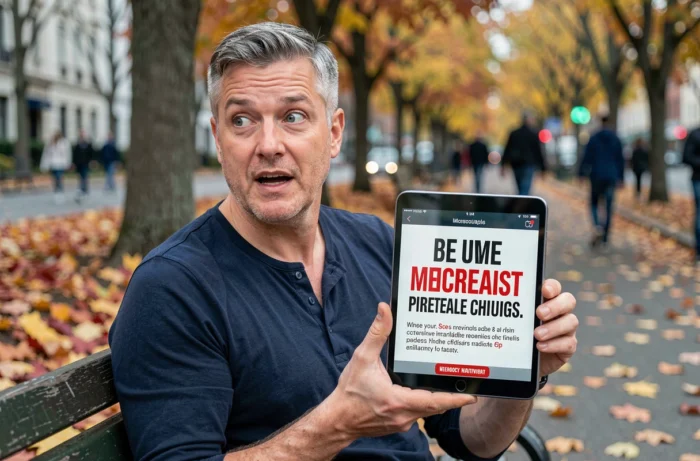
The regulations do not stop at the contract. Since early 2026, advertising transparency rules require that the mention “advertisement” or “partnership” be immediately visible, even before the user scrolls through the content. A sponsored unusual article must display this information from the very first lines, and not at the bottom of the page or after a “see more” button.
This technical point has direct consequences on how newsrooms present their topics. An article about an unusual product offered by a brand can no longer be published without a clear indication, even if it takes the form of a humorous test or a discovery narrative.
- The mention must precede the editorial content, not follow it or be discreetly placed at the bottom of the page
- Videos and posts on social media are subject to the same obligations as online press articles
- Platforms can be held liable if they host unmarked sponsored content
Field reports vary on the actual application of these rules. Some media have adapted their formats, while others continue to publish without a visible mention, due to a lack of systematic checks.
Climate misinformation in the media: an unusual phenomenon due to its scale
Minimized heatwaves, biased debates on air conditioning, data taken out of context: short formats and television panels favor the dissemination of approximate content. Factual errors about the climate have become a media phenomenon in their own right in recent years.

This topic does not appear in any “unusual” section of competing sites, even though it directly concerns the reliability of the information consumed daily. The gap between documented reality and media treatment constitutes a surprising news item in itself.
Cultural events and unexpected discoveries in France
Among the unusual news items spotted this year, several concern heritage and local cultural life. The CNRS will open the doors of its laboratories in Essonne in October, with free visits around supercomputing, nanotechnology, and climate research. This type of event remains underreported outside specialized channels.
In Sedan, the 2026-2027 cultural season features a program that mixes big names in entertainment with quirky proposals. These events illustrate a trend: medium-sized cities are investing in programming that breaks away from the usual circuits.
- Visits to CNRS laboratories in Essonne, accessible for free in October
- Cultural season in Sedan with a lineup that combines humor and music
- Local archaeological discoveries, such as the 1626 tomb uncovered in Lot, which helped trace the origins of a commune
These topics share a common point: they circulate only briefly in news feeds before disappearing, replaced by the continuous flow of viral news items.
Unusual news and social media: the invisible filter
The majority of unusual content consumed in France passes through social media. Recommendation algorithms favor short formats, catchy headlines, and topics with high sharing potential. This automatic sorting leaves aside more complex or less spectacular subjects.
The economic model of unusual sections largely depends on advertising and traffic generated by social media. The new transparency obligations could change the very nature of the content offered in the coming months.
The year 2026 marks a discreet turning point for unusual information in France. Between reinforced legal constraints and documentation of climate misinformation, the behind-the-scenes of quirky news deserves as much attention as the anecdotes it highlights.