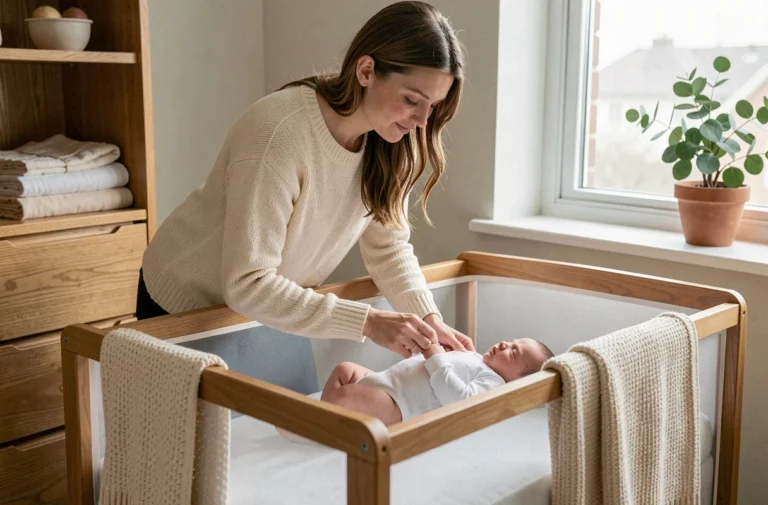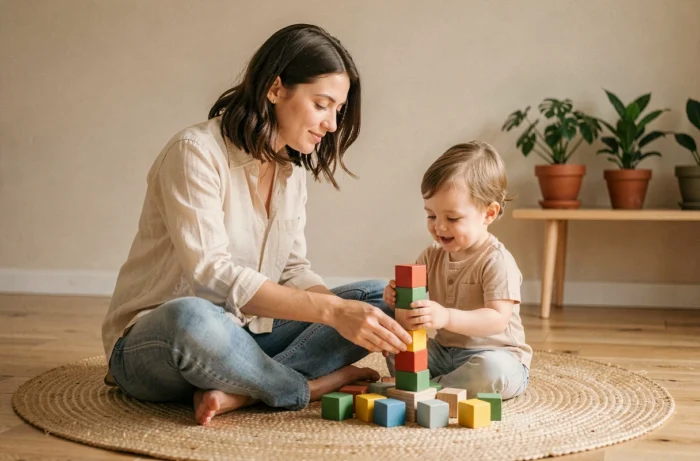
Supporting a child’s development and well-being every day involves several dimensions at once: sleep, nutrition, free play and emotional security. The WHO groups physical activity, sedentary time and sleep in its recommendations for children under five, highlighting that development is about more than sensory or motor stimulation alone. Which factors have the greatest impact on a child’s well-being, and how can parents balance them throughout the day?
Sleep, physical activity and sedentary time: three interconnected factors in child development
Most parenting content treats sleep, play and screen time as separate categories. The WHO’s recommendations for young children’s health take the opposite approach: these three factors form an interconnected 24-hour cycle.
| Factor | Traditional approach (parenting content) | Integrated approach (WHO recommendations) |
|---|---|---|
| Sleep | Covered in a dedicated article, often focused on bedtime routines | Seen as a foundation that affects the quality of physical activity the following day |
| Physical activity / active play | Listed as activity ideas (playdough, obstacle courses) | Measured in daily duration, spread throughout the day and adapted to age |
| Sedentary time (including screen time) | Addressed through the lens of parental guilt | Part of an overall balance: reduce prolonged sedentary time, not just screen time |
This table highlights a common disconnect: parenting guides address each topic in isolation, even though sleep, active play and sedentary time balance one another throughout the day. A child who sleeps poorly recovers less effectively from play, while a child who is too sedentary during the day may find it harder to fall asleep at night.
Parents who notice how these factors interact with their child’s routine can make adjustments without adding extra activities. It is a matter of redistributing what is already part of the day.
Psychomotor development and a child’s independence: what everyday situations can teach
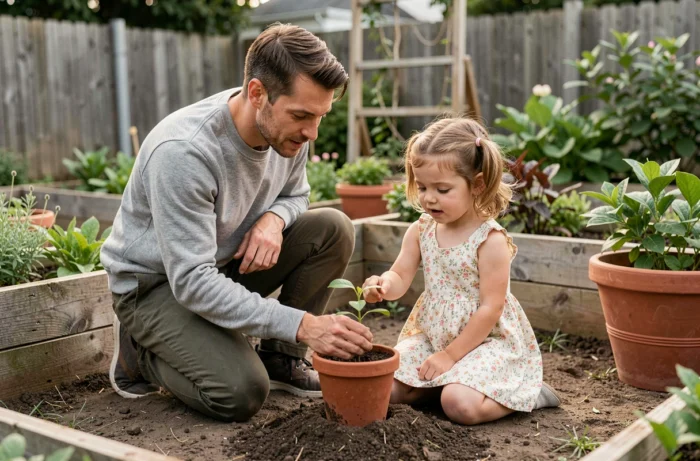
Psychomotor development takes place in situations that parents may not always recognize as learning opportunities. Pouring water, putting on shoes or sorting socks by color: these everyday tasks engage fine motor skills, coordination and decision-making.
The official 1000 premiers jours portal points out that emotional security underpins a child’s ability to explore. A child who feels safe with the adult nearby is more willing to handle things, experiment and make mistakes. Without this foundation, even the most elaborate developmental activities lose their impact.
Parents can find additional guidance on the Vive Mon Bébé website for children, which brings together resources tailored to different age groups to support every stage of development.
Three everyday situations illustrate the link between independence and development:
- Helping prepare a meal (pouring, mixing, naming foods) strengthens fine motor skills and vocabulary while giving the child an active role in family life.
- Getting dressed alone, even partly, develops hand-eye coordination and decision-making—two skills also practised in structured movement activities, but less often in everyday life.
- Sorting toys into categories (by size or color) introduces classification and logical thinking without the need for special materials.
The goal is not to turn every moment into a learning session. It is to recognize the developmental value of activities already woven into the day, without adding pressure.
A safe environment and confidence: the foundations that come before stimulation
Online content about child development mostly offers lists of activities. Before any activity begins, the physical and emotional environment shapes the quality of a child’s exploration.
A safe space does not mean an empty space. It is a place where a child can move freely, reach objects at their level and return to the adult when needed. The layout of a space directly affects freedom of movement: a clear floor encourages crawling and then walking far more than a play area cluttered with toys.
Emotional security plays a similar role. When a child’s cues (crying, eye contact, gestures) receive a consistent response, they develop what early childhood specialists call secure attachment. This foundation helps them explore with less anxiety, tolerate the frustration of failure (a tower falling over, an incomplete puzzle) and try again.
Two practical things to look out for each day:
- Predictable routines (meals, naps, bath time) reduce a child’s stress and free up their attention to explore during the time in between.
- An attentive adult, even a quiet one, is often enough to reassure a child. Supporting a child’s development does not mean directing every game: watching them play alone without stepping in is part of that support.
Free play and guided activities: finding the right balance for each age
Free play (with no instructions or adult-set goal) and guided activities (songs, movement courses, shared reading) serve different purposes in a child’s development.
Free play encourages creativity, initiative and emotional self-regulation. Guided activities build specific skills such as vocabulary, rhythm and coordination. Both approaches complement each other; neither replaces the other.
For babies, free play naturally takes the lead: exploring a piece of fabric, mouthing an object or watching their hands. As children grow, guided activities become more relevant, but they are still most effective when alternated with periods of independent play. A child who moves from one structured activity to the next without a break may eventually lose their ability to take initiative.
The right balance also depends on temperament. Some children can focus on a solitary activity for a long time, while others constantly seek interaction. Observing your child over several days offers more reliable guidance than a one-size-fits-all guide.
Supporting a child’s well-being and development every day depends less on choosing activities than on paying close attention to the child’s individual rhythms. Routines, space, adult presence and a balance of free play and guided activities create a simple framework whose effects on development become clear over time.