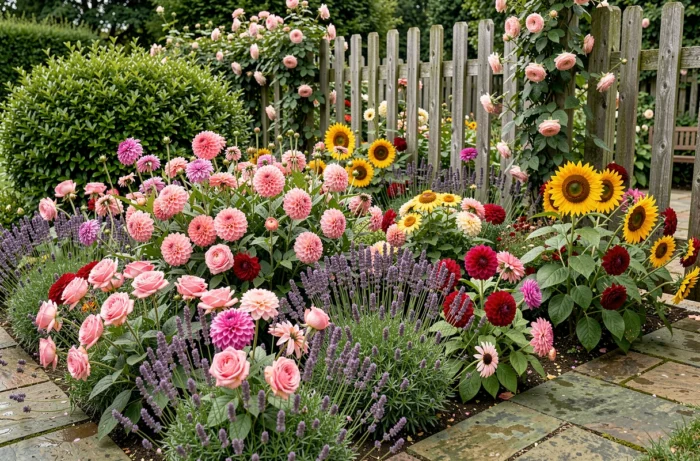
A mass of colors that explodes in June and then ends up bare by September is the classic scenario when planting without considering flowering cycles. To enhance a garden over time, the choice of flowers relies on three concrete parameters: the flowering season, the nature of the soil, and the level of maintenance you are willing to provide.
Here’s how to approach these criteria to create a flowering garden that keeps its promises well beyond spring.
Invasive exotic species: what the regulations change for your garden
Have you already noticed pampas grass in the gardens of your neighborhood? This ornamental grass, long prized for its spectacular plume, has been on the national list of invasive exotic species since April 2023. The ban covers the possession, transport, exchange, and sale of live specimens. The deadline granted to commercial stocks ended on September 1, 2024.
The Himalayan balsam is following the same path. This pink flower, common along waterways, has been subject to a ban on sale, planting, and transport since August 2025. Before buying or multiplying a species in your garden, check the current regulatory lists to avoid an unpleasant surprise.
Another often-overlooked point: some common plants require information about health risks. The oleander, for example, is subject to an order in effect since July 2021. In garden centers, the information must be displayed near the plant. Online, it must appear on the product page. If you order your plants remotely, especially from Tradition Jardin flowers, this mention must be clearly visible.
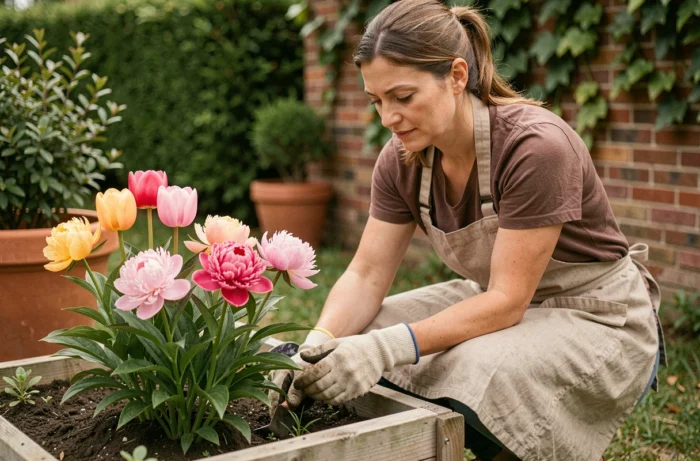
Perennials and annuals: choosing based on the lifespan of the flowerbed
The distinction between perennials and annuals shapes the architecture of your garden for several years. Understanding this difference helps avoid replanting in the same spot every spring.
Perennials: a long-term investment
A perennial plant regrows on its own after winter. It develops a deeper root system over the years, making it gradually more drought-resistant. Roses, perennial geraniums, and shrub salvias fall into this category.
A well-designed perennial bed requires less work each year. The first season is the most demanding: regular watering, weeding, mulching. After that, the plants fill the space and naturally limit the growth of weeds.
Annuals: immediate and flexible color
Annuals complete their entire cycle in one season. Petunias, zinnias, and cosmos germinate, bloom, produce seeds, and die before winter. Their main advantage: abundant and continuous flowering for several months.
They allow you to test color combinations without commitment. If the result doesn’t please you, you start over the following spring. Annuals are the ideal testing ground to refine your tastes before investing in more expensive perennials.
Flowering by season: creating a colorful garden all year round
Most gardens concentrate their colors between May and July. Expanding the palette over twelve months requires thinking in seasonal layers.
- At the end of winter and the beginning of spring, bulbs take over: crocuses, daffodils, tulips. Planted in autumn, they require little maintenance and easily naturalize in a lawn or at the foot of shrubs.
- Summer is the season for dahlias, lavenders, and echinaceas. These plants withstand heat and offer long-lasting blooms, often until the end of September.
- For autumn, focus on asters, Japanese anemones, and ornamental grasses (ensuring they are not on the invasive species lists). Their warm hues extend the visual interest of the garden.
- In winter, hellebores (Christmas roses) and some winter-flowering shrubs like winter jasmine ensure a minimum of color during the grayest months.
Pairing at least two plants per season guarantees a continuity of flowering. Note the start and end dates of flowering for each species on a simple calendar. This overview immediately reveals the empty months that need filling.
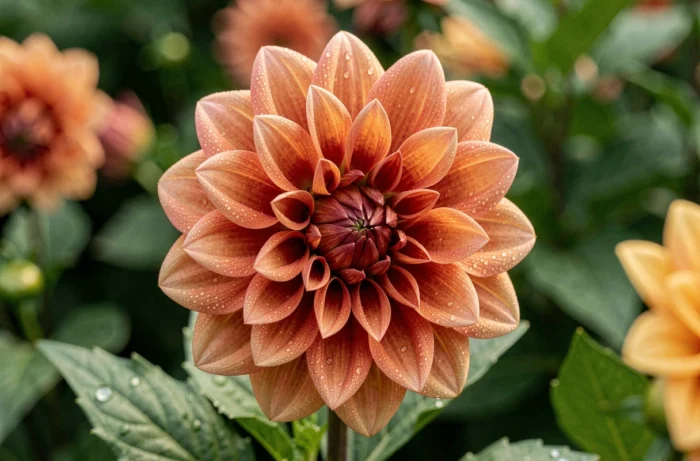
Adapting your flowers to local watering restrictions
Drought orders have become common in many French municipalities. During a crisis, watering flowering beds may be completely prohibited, even in private gardens. This parameter directly influences the choice of species.
Mediterranean plants (lavender, rosemary, gaura, valerian) tolerate weeks without water once well-rooted. A mulched soil of five to ten centimeters significantly reduces evaporation and limits the need for watering even in the height of summer.
Have you ever observed a bed of annual flowers in the middle of a heatwave without watering? The result is rarely encouraging. If your region frequently experiences restrictions, prioritize a base of drought-resistant perennials, complemented by a few annuals in pots that you can water occasionally with collected water.
Concrete criteria for choosing water-efficient flowers
- Gray or silver foliage: a sign of adaptation to dry environments. Cistus, wormwoods, and stachys are good examples.
- Deep taproots: they allow the plant to seek moisture deep down. Mallow and scabious develop this type of root system.
- Compact growth and leathery leaves: these characteristics limit the evaporation surface. Thyme, helichrysum, and santolina combine both.
Choosing flowers suited to your local context also reduces treatments and interventions. A resilient flowering garden is built on knowledge of its soil and climate, not on a catalog of spectacular varieties unsuitable for your land.