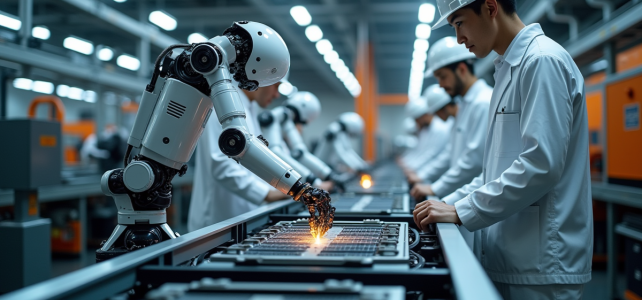
A spare part emerging from a printer at the foot of the machine: this was once the stuff of industrial fantasy. Today, 3D printing is taking hold in workshops, freeing creation from traditional chains and providing technicians with a tool of ingenuity they never dared to dream of. As for collaborative robots, they no longer accept mere repetition: they react in real-time, adjusting their movements thanks to the vast amount of data captured on the ground. Artificial intelligence, discreet yet formidable, finally brings the precision that only experts once had access to.
Workshops now vibrate to the rhythm of sensors and automata that communicate relentlessly. Equipment today forms a reactive network where every emerging alert is raised before it can cause any damage. This continuous flow of information has swept away the improvisation of the past and changed the very way factories are run: now, the organization anticipates, routines evolve, and novelty emerges where it was least expected.
Further reading : Top 10 Best Free Apps to Easily Translate All Your Languages
What technological disruptions are transforming industry today?
Industry no longer rides the train of modernity: it drives it. Now, on the production lines, collaborative robots do not just imitate our gestures; they complement them, innovate, and actively contribute to overall efficiency. Artificial intelligence steps in to fine-tune every adjustment, analyze a mountain of data on the fly, and trigger increasingly well-adjusted decision-making. Meanwhile, additive manufacturing dethrones stored volume and bets on just-in-time production, resulting in a wealth of concrete savings and newfound agility.
The era when humans and machines worked side by side without interaction is coming to an end. Welcome to permanent connectivity: cyber-physical systems detect the slightest anomaly and trigger interventions before any incident can even begin to unfold. Thanks to predictive maintenance, breakdowns become predictable, and operations adapt without waiting for a shock.
Recommended read : The latest trends and innovations in the automotive world you must discover
Today, it is impossible to ignore the wave of IoT: every link in the chain becomes transparent, traceable, and potential flaws are identified more quickly. Cybersecurity stands as a sentinel against increased vulnerability, ensuring that all data traffic is monitored at the source. Also indispensable is augmented reality, which enhances learning, control, and maintenance towards greater speed and efficiency.
For many industrialists, the ability to adapt now relies on advanced solutions. Among them, EI&A marks a significant advancement: reactivity, flexibility, and a clear advantage in a globalized context where competition never weakens.
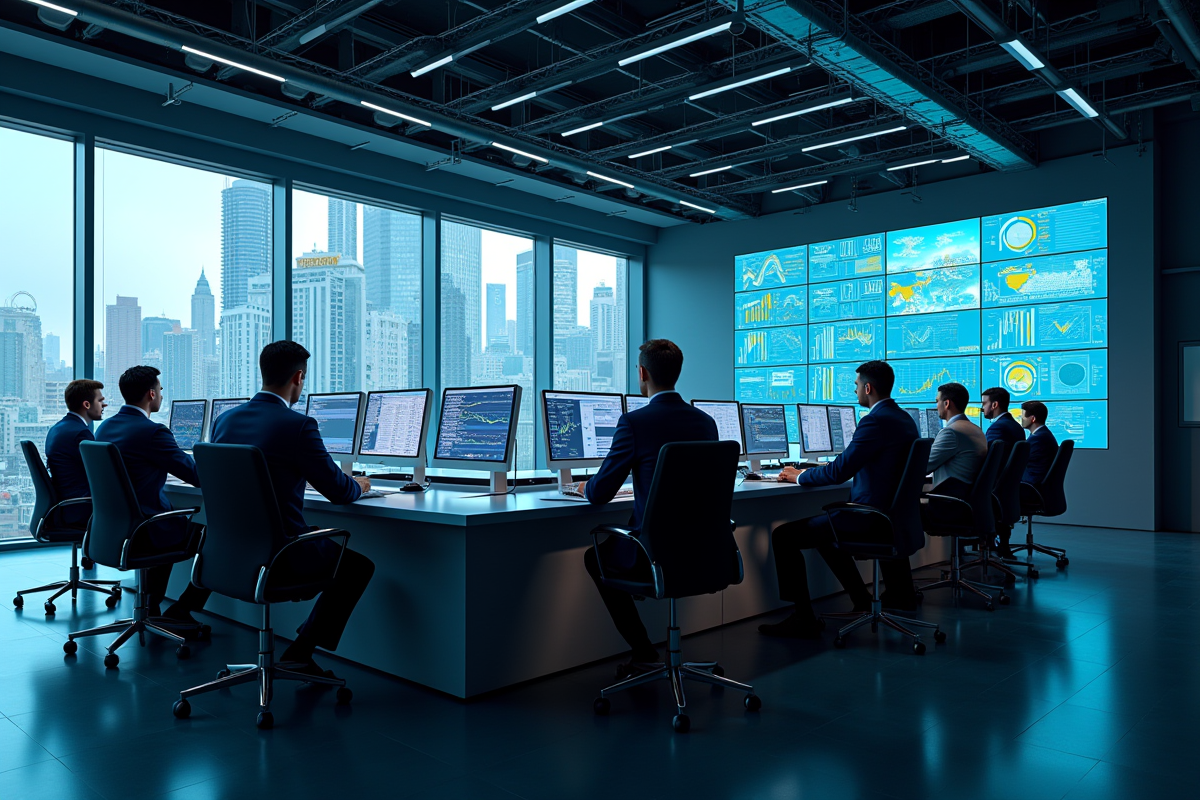
Spotlight on emerging trends: from intelligent robotics to sustainable manufacturing
The fifth industrial revolution does not seek to compete with humans: it integrates them, moving forward together towards a shared goal. In warehouses, mobile autonomous robots harmonize flows, intervene at the first alert, and take over without hesitation. Isolated incidents fade in the face of this new coherence.
The transformation is also taking place in the realm of the factory of the future: solar roofs, intelligent consumption management, 3D printing that minimizes waste and gives materials a second life. The desire to produce locally is now combined with the necessity for creativity, with a solid emphasis on environmental impacts.
Concrete developments in the sector are emerging around a few structuring axes:
- Sustainability: equipment is designed to last, resources are used judiciously, and valorization is prioritized over accumulation.
- Social responsibility: safety and collective well-being become major references, surpassing mere productivity concerns.
Short-term logics are giving way to a new approach, more grounded, more human, and mindful of its environment. Technological choices are made through adjustments, progress is fueled by listening and analysis, with a focus on an alliance between efficiency, resource respect, and shared commitment. Innovation is measured by its ability to unite around a sustainable dynamic. A door opens: industry challenges its own certainties and invites everyone to find their place in this collective momentum, where every movement shapes the contours of tomorrow’s world.