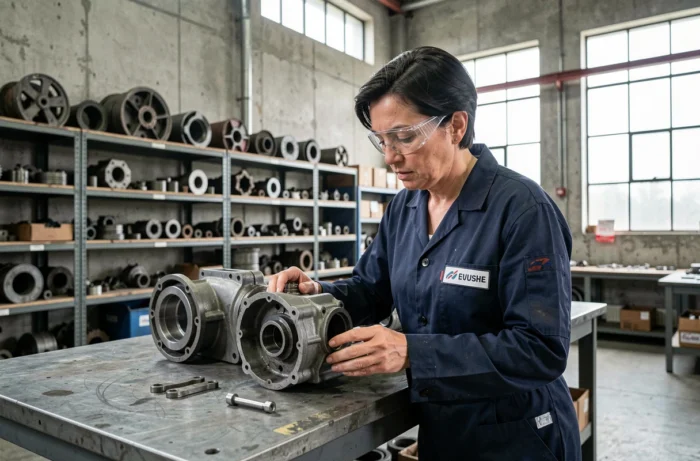
In an industrial site, when sorting production waste to reinject it into the next line, we are already practicing circular production without necessarily naming the concept. Scaling up, however, poses very concrete problems: traceability of materials, cost of reconditioning, compatibility between waste streams and product specifications. It is on these friction points that the transition to a truly operational circular production hinges.
Traceability of Recycled Materials in Circular Production
When reintegrating a recycled material into a manufacturing process, the first question is not environmental; it is technical: can we guarantee the compliance of the finished product? In practice, the answer depends on the quality of the sorting upstream and the ability to document the origin of each batch.
The European regulation on the eco-design of sustainable products (ESPR), adopted in June 2024, pushes in this direction. It sets requirements regarding the durability, reparability, and recyclability of products. It also paves the way for the digital product passport, a system that will associate standardized data about the lifecycle of certain categories of goods.
In practical terms, this means that a manufacturer will need to provide verifiable information about the proportion of recycled material, the presence of concerning substances, and the recycling conditions at the end of life. For small and medium-sized industrial enterprises, this traceability requirement represents an investment in information systems that many have not yet anticipated. You can consult sustainable issues on Partagez to gauge the scope of the topic.

Public Procurement and Reuse: A Concrete Lever for Sustainable Production
Decree No. 2024-134 of February 21, 2024, has changed the game for French public buyers. It imposes specific obligations regarding the purchase of goods from reuse or incorporating recycled materials, with progressive targets by product category and an annual declaration of purchases.
In practice, when a community launches a tender for office furniture or IT equipment, it must now integrate circularity criteria into its specifications. For suppliers, this creates a structured outlet but also a constraint: they must prove the compliance of the reused material.
What This Changes for Industrial Suppliers
A furniture reconditioning workshop, for example, must document each step: collection, diagnosis, refurbishment, quality control. Feedback on this point varies depending on the size of the company and the type of product, but the regulatory framework pushes towards standardization of processes.
The expected result is twofold. On one hand, industrial waste management finds an economically viable outlet. On the other, public procurement becomes a driver of the circular transition by guaranteeing a regular purchasing volume for reuse sectors.
Eco-design and Waste Reduction at the Source
Recycling at the end of the chain is costly and generates losses. The approach gaining ground consists of rethinking the product from its design to limit waste generated throughout its lifecycle.
The ESPR frames this logic by setting requirements that may concern:
- The durability of the product, meaning its ability to withstand wear without premature replacement
- The reparability, which implies access to spare parts and a dismountable architecture
- The effective recyclability, not just theoretical, taking into account existing sorting infrastructures
On the ground, we see manufacturers revising their assemblies to switch from gluing to screwing, or replacing difficult-to-recycle composites with mono-materials. These choices come with a development cost, but they reduce the end-of-life waste management bill.
The Packaging Regulation as an Additional Constraint
Adopted in early 2025, the European regulation on packaging strengthens requirements regarding reduction, reuse, and recycling. For companies operating in several European countries, this limits divergent national strategies and imposes harmonization of packaging practices.
An agri-food manufacturer exporting to five EU countries must now anticipate common thresholds for recycled material in its packaging, instead of juggling five different regulations. Regulatory simplification facilitates planning, even if it raises the overall level of requirements.
Industrial Investment and Transition to a Circular Model in France
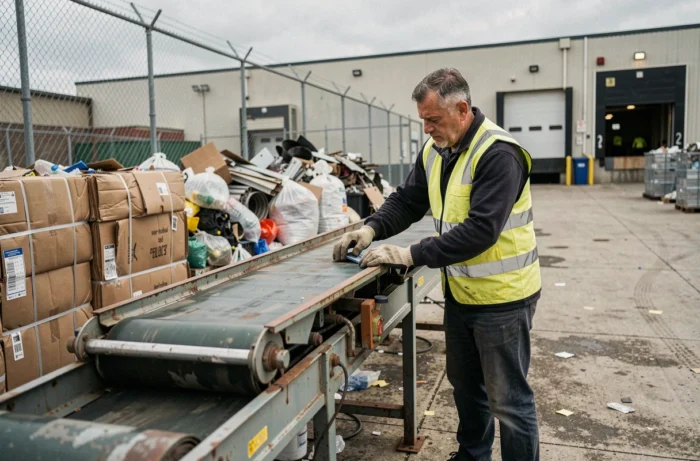
According to a study by INSEE, the amounts invested by French industrialists to reduce their environmental impact have significantly increased in recent years. This increase covers various areas: modernization of production lines, installation of internal sorting systems, training of staff on new standards.
The main barrier remains the short-term return on investment. Transitioning from a linear model to a circular model requires modifying entire supply chains. The flows of recycled materials are not as predictable as virgin supplies: variable quality, fluctuating volumes, collection delays.
Structuring Local Recycling Sectors
For circular production to work at the scale of a territory, the waste flows of one company must match the material needs of another. This is the principle of industrial symbiosis, which requires coordination among local actors.
- Identifying the sources of recoverable waste in a given employment area
- Connecting waste producers and consumers of secondary materials
- Ensuring consistent quality through shared sorting and control protocols
This structuring cannot be decreed. It requires fieldwork, often supported by agencies like ADEME, and a willingness from economic actors to share data about their flows.
Circular production is not a label to display; it is a set of technical, regulatory, and logistical constraints to be solved simultaneously. Recent European regulations set a clear course, but implementation relies on each industrial site’s ability to adapt its processes. Companies that commit to this now are building a sustainable operational advantage, not just an image.