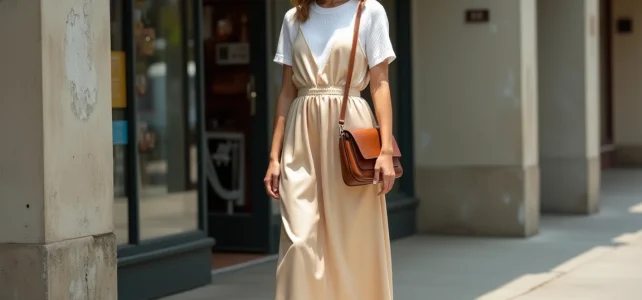
Which clothing items from 1995 have truly survived the cycles of fashion, and which are merely fleeting nostalgia? Between the radical minimalism of certain houses and the raw energy of emerging streetwear, this year encapsulates fashion trends whose influence can still be measured on today’s runways. Comparing these currents allows us to distinguish between durable pieces and mere retro curiosities.
Comparative table of fashion trends from 1995 and their recent resurgence
Several styles coexisted in 1995, each driven by distinct designers and cultural references. Their return in the 2020 collections has not been uniform: some trends have been cited almost word for word, while others remain marginal.
You may also like : The latest trends and innovations in the automotive world you must discover
| 1995 Trend | Key Pieces | Associated Designers | Documented Recent Revival |
|---|---|---|---|
| Minimalism | Sleek suits, straight dresses, neutral colors | Jil Sander, Prada | Miu Miu and Prada (2022): micro-skirts, cropped cardigans, volumes identical to 1994-1996 |
| Late Grunge | Faded jeans, oversized flannel, worn sneakers | Marc Jacobs, independent labels | Occasional references, especially in streetwear |
| Structured Glamour | Form-fitting printed dresses, highly tailored suits | Gianni Versace | Versace (2018 and 2021): direct reissues of 1994-1995 silhouettes |
| Futurism/Cyber | Synthetic materials, asymmetrical cuts, shiny leather | Thierry Mugler, Hussein Chalayan | Occasional revivals in haute couture, low mainstream diffusion |
What stands out from this table is that minimalism and structured glamour are the two trends most frequently revived by current houses. Grunge, despite its cultural popularity, has had a more diffuse return, limited to the streetwear segment. The cyber-futuristic trend remains a niche reference.
To delve deeper into each style and its variations, a detailed overview dedicated to 1995 fashion on Aleph Zarro places these currents in their precise cultural context.
Further reading : Board games and playful activities: discover the must-have trends of the moment
Oversized jeans and sneakers: the 1995 pieces that became wardrobe classics
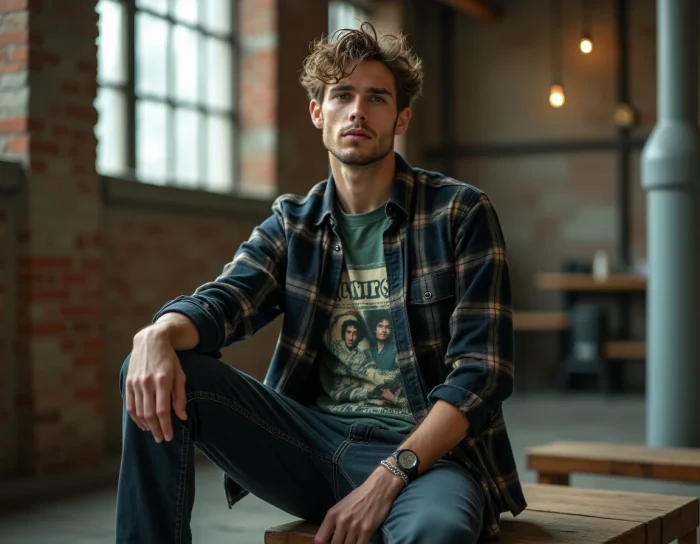
The high-waisted, wide-cut jeans are undoubtedly the most transversal piece from 1995. Worn by both teenagers fresh out of middle school and off-duty models, it transcended all currents. In just two seasons, this cut replaced the slim fit inherited from the late 80s.
Sneakers followed a parallel trajectory. Thick-soled models, sometimes resembling platform shoes, were worn with both dresses and jeans. This mix of styles (sportswear and formal wear) was then perceived as a break.
The most striking aspect is the longevity of these pieces. Unlike the baroque prints of Versace or the cyber cuts of Mugler, which require a precise stylistic context, oversized jeans and thick-soled sneakers have never completely left the everyday wardrobe. Their resurgence cycle is shorter than that of other 1995 trends, which explains why they seem less “retro” than the rest.
What differentiates the 1995 version from current versions
The cut of the 1995 jeans often sat very low on the hips, with thick, rigid fabric. Contemporary versions have a higher waist and use softer denims. The look remains similar in silhouette, but comfort and construction have changed.
For sneakers, the difference lies in the materials. White synthetic leather dominated in 1995. Recent reissues favor combinations of suede and mesh, with technical foam midsoles that were absent at the time.
Cultural influences on the 1995 style: beyond Clueless and Friends
The majority of French-language articles on 1995 fashion cite the same references: the film Clueless, the series Friends, the Spice Girls. However, other cultural vectors played a comparable role.
Books dedicated to 90s Asian fashion document the dissemination of dress codes through Japanese dramas and J-Pop in the middle of the decade. Some very concrete elements of the style of the time (layering, colorful accessories, miniature bags) circulated in Japanese cultural productions before appearing in mainstream Western fashion.
This Asian aspect sheds light on why certain pieces from 1995 (the small rigid bag, the cropped cardigan, pastel colors associated with sportswear) seem to have multiple simultaneous origins: they indeed did.
- The miniature rigid bag, popularized by Clueless in the West, already existed in the wardrobes of Japanese idols as early as 1994
- The cropped cardigan, attributed to Prada collections, was found in J-Pop looks disseminated by Tokyo fashion magazines
- The sneaker-dress combinations, often credited to American streetwear, appeared in Korean and Japanese dramas of the same period
1995 pieces rarely revived: what recent shows leave aside
Not all trends from 1995 have received the same treatment in recent collections. The cyber-futuristic trend championed by Mugler and Chalayan, with its rigid synthetic materials and cyborg-inspired silhouettes, remains confined to haute couture and limited editions. Its mainstream diffusion is almost nonexistent.
Similarly, the bright colors worn in monochrome blocks (an entirely orange outfit, entirely purple) that marked some spring 1995 shows have not found massive resonance. Recent revivals favor muted palettes or color combinations, never the saturated monochrome as it was practiced at the time.
Shiny leather garments, omnipresent in 1995 evening looks, have had a limited and seasonal return. In contrast, matte leather and soft faux leathers have prevailed, confirming that material matters as much as cut in the survival of a trend.
The selection made by contemporary houses shows a clear logic: the pieces revived are those that integrate into an everyday wardrobe (jeans, sneakers, cardigans, sleek suits). Elements that require a strong stylistic commitment (shiny leather, saturated monochrome, futuristic prosthetics) remain runway citations, not commercial propositions. This filter distinguishes cultural nostalgia from market viability.