No combination of plants guarantees a sustainable balance in an outdoor space. Plant harmony depends as much on the selection of species as on the attention given to their development over the seasons.
The diversity of soils, exposures, and microclimates requires adapting landscaping and flowering techniques. Some traditional rules are often bypassed to adjust to the reality of the terrain.
Why aim for harmony in a flowering garden?
Creating a flowering garden is not about randomly aligning plants. The search for balance guides every choice, every arrangement, to make the outdoor space a coherent whole. Here, every color, every volume, every bloom follows a clear logic. This care avoids messy entanglement and brings a soothing breath, both for the eye and the mind.
The choice of varieties, the way to arrange them: all this requires thinking about the sequence of colors, the complementarity of sizes, and the diversity of foliage. From the compact soil of the north to the light earth of the south, each garden demands its own solutions. To give character to the whole, it is better to select plants suited to the light, wind, and soil structure.
Thinking of a harmonious garden also means considering circulation, light, and the place of vegetation in relation to stone or wood. Sometimes, a curved path, an alignment of perennials, or a water feature is enough to reveal a landscape. Harmony is not a matter of chance, but of patient construction, nourished by advice and concrete examples gleaned from passionate gardeners.
To nourish your inspiration, refine your choices, and discover specific examples, feel free to visit Une Fleur Un Jardin. You will find resources for every step: spotting plants, organizing your space, and gathering original ideas. This approach sharpens the eye and stimulates the imagination, a precious duo for shaping a garden where diversity aligns with unity.
What plant combinations for a successful visual effect?
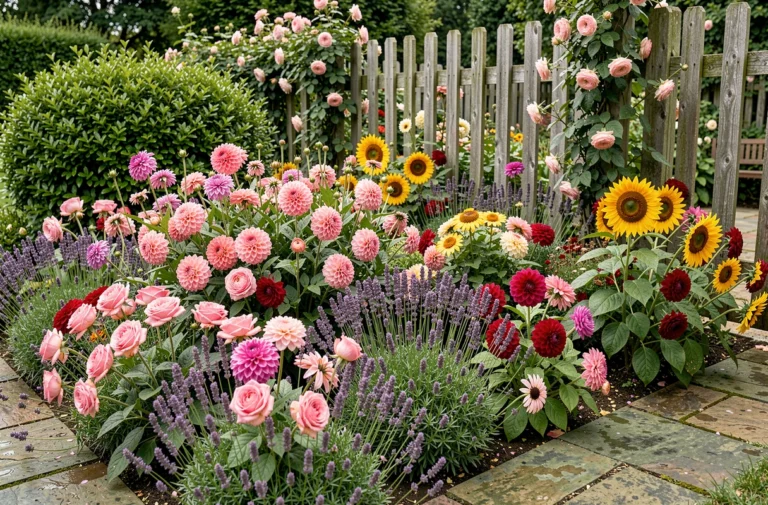
Designing a flowering bed that works is about playing with the rhythm of blooms and the range of textures. The gardener, as a discreet conductor, assembles perennials, climbers, shrubs, and annual flowers to create a tableau in perpetual motion. Visual success arises from the thoughtful association of well-chosen species, adapted to the soil, lighting, and climate.
Here are some tips for structuring your plant associations:
- Vary heights: place the tallest plants, such as roses or delphiniums, at the back. Next come the medium-sized perennials (rudbeckias, Geranium rozanne), followed by ground covers (alchemilla, bellflowers) to border the bed.
- Play with colors: exploit contrasts, for example with asters or poppies for bright touches, against silver or purple foliage. The pairs of lavender blue and yellow, or pale pink and white, structure without weighing down.
- Favor texture diversity: combine the large leaves of hostas with light grasses to create relief. Climbers, clematis or honeysuckles, bring verticality and volume.
A rich or draining soil imposes different choices: fragrant lavender loves light soil, while evergreen shrubs provide structure all year round. For a flowering garden in France, focus on local species that are robust against weather fluctuations. These well-thought-out associations ensure a lasting visual effect and a succession of blooms that promote biodiversity.

Practical ideas and tips for personalizing your outdoor space
The flowering garden is shaped according to desires, site constraints, and how one wishes to enjoy it. To design a space that blends colors, shapes, and scents, start by identifying shaded and sunny areas. Adapt the layout to take advantage of each spot, from the shaded northern corner to the sun-drenched terrace. The placement of beds, circulation, the creation of a vegetable garden or a relaxation area: each choice contributes to a coherent overall atmosphere.
Here are some concrete tips to give character and coherence to your garden:
- Elements to highlight: use terracotta pots, a few pebbles, or wooden benches to punctuate the space and create visual pauses. Each object or plant contributes to the atmosphere you want to create.
- Combine uses: place an aromatic corner near the house, a flowering bed visible from the window. Playing on the proximity between the practical and the aesthetic enhances the feeling of harmony.
- For a flowering garden all year round: integrate plants with staggered blooming and evergreens. This choice ensures a renewed decor, without breaks between the seasons.
Repeat certain species to create a common thread or, conversely, dare to surprise with an unexpected perennial. The diversity of heights, the insertion of vertical structures, the pathways between points of interest: these are all tips and inspirations for creating a flowering garden that is balanced and reflective of you, without ever sacrificing authenticity for fashion. A successful garden is primarily one that resembles those who inhabit it. In the beautiful season, it will be the theater of a thousand stories, between bursts of color and muted silences.