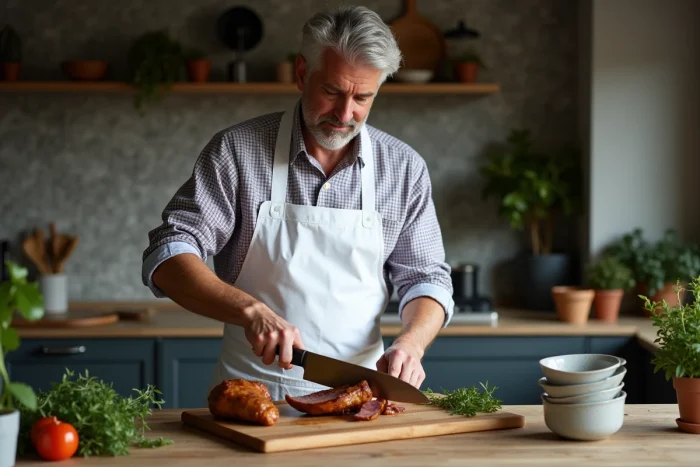
A slow cooking does not always guarantee tender meat; the choice of cut and the precision of the temperature remain crucial. Some marinades, although popular, mask the natural finesse of the lamb shoulder instead of enhancing it. Success relies on a technical balance between moisture, resting, and oven control, far from risky improvisations. A few professional gestures are enough to transform this traditional cut into an exceptional dish.
Why lamb shoulder in the oven is so appealing to cooking enthusiasts
It is impossible to overlook the lamb shoulder when it comes to gathering family and friends around a true gourmet table. Taken from the front leg, it imposes itself without ceremony, much more accessible than the leg of lamb and just as delightful. The shoulder carries a bold flavor, a melting texture, and that extra soul: each bite brings people together, each plate tells a story. From one region to another, the animal claims authenticity, AOP Prés-salés du Mont-Saint-Michel, lambs from the Bay of Somme, to better delight and remind where it comes from.
Its versatility also contributes to its success: whether whole on the bone or already trimmed by the butcher, the shoulder remains easy to tame. Simple herbs and spices, garlic, thyme, a drizzle of honey, are more than enough to elevate its finesse. Once placed in the oven, the real challenge begins: every detail, from preparation to serving, shapes the final success. To grasp all its intricacies, the best reference remains the cooking lamb shoulder in the oven like a chef. Master the sequence, monitor the heat, and you have the dish that unites all appetites.
What are the secrets to successful cooking: choice of meat, seasoning, and cooking time
It all starts at the butcher’s counter, in front of a meaty piece, wrapped in clean white fat, a witness of freshness and care. A farm-raised lamb shoulder promises remarkable flavor. Keeping the bone means choosing depth, flavor, and a rich juice: the mark of connoisseurs.
Before starting, let the meat reach room temperature for about an hour. This “out of the cold” time relaxes the fibers, ensures even cooking, and guarantees flawless tenderness. Prepare it simply: olive oil, salt, pepper, sprigs of thyme, rosemary, and a few whole garlic cloves tucked into the meat. A touch of honey or a hint of mustard is enough to reveal another dimension, while a sprinkle of cumin can shake up the usual habits.
Several techniques offer results suited to all desires. Here’s an overview of methods to adopt according to your expectations:
- Confit and melting shoulder: cook slowly for 4 to 5 hours at 150 °C, the meat falls apart and remains silky.
- Golden and juicy shoulder: plan for 1.5 to 2 hours at 200 °C for a pearly, still juicy meat, with a beautiful golden crust.
- Very low-temperature cooking: 6 to 7 hours between 80 and 90 °C offers exceptional tenderness, where each fiber takes its time to deliver the best.
Throughout the cooking, baste the meat with the juice that forms at the bottom of the dish. This seemingly trivial gesture maintains moisture and enhances every flavor. Treat yourself, as a bonus, to some fresh vegetables, carrots, onions, potatoes, which will absorb the juice and generously complement the dish. The internal temperature is also a reliable indicator: 58 to 60 °C to preserve the pinkness, up to 70 °C for those who prefer a more well-done cooking. And above all, let the meat rest for ten minutes under a sheet of aluminum before carving: this short delay makes all the difference in tenderness.
Chef tips and delicious variations to elevate your lamb shoulder
When looking to give a signature to your dish, everything lies in the details. A marinade prepared the day before, based on fresh herbs, spices, a drizzle of honey, or a hint of cinnamon, can transform the meat without ever masking its true nature. For a “baker’s” version that pleases everyone, place the shoulder on a well-stocked bed of vegetables, moisten with broth, and let the oven bring each flavor together: the result is entirely yours.
For those wanting to vary, there are several interesting alternatives:
- Dairy marinade with fresh flavors: immerse the meat in a mixture of yogurt, coriander, garlic, lemon, ginger. Guaranteed result: tenderness and subtle acidity.
- Notes inspired by the East: work with a base of spices like cumin, coriander, paprika, mint, and cinnamon; a drizzle of honey after cooking will reveal the unique character of the lamb.
- Different accompaniments: to change things up, place turnips, chickpeas, or lentils around the shoulder; enough to surprise and delight without repetition.
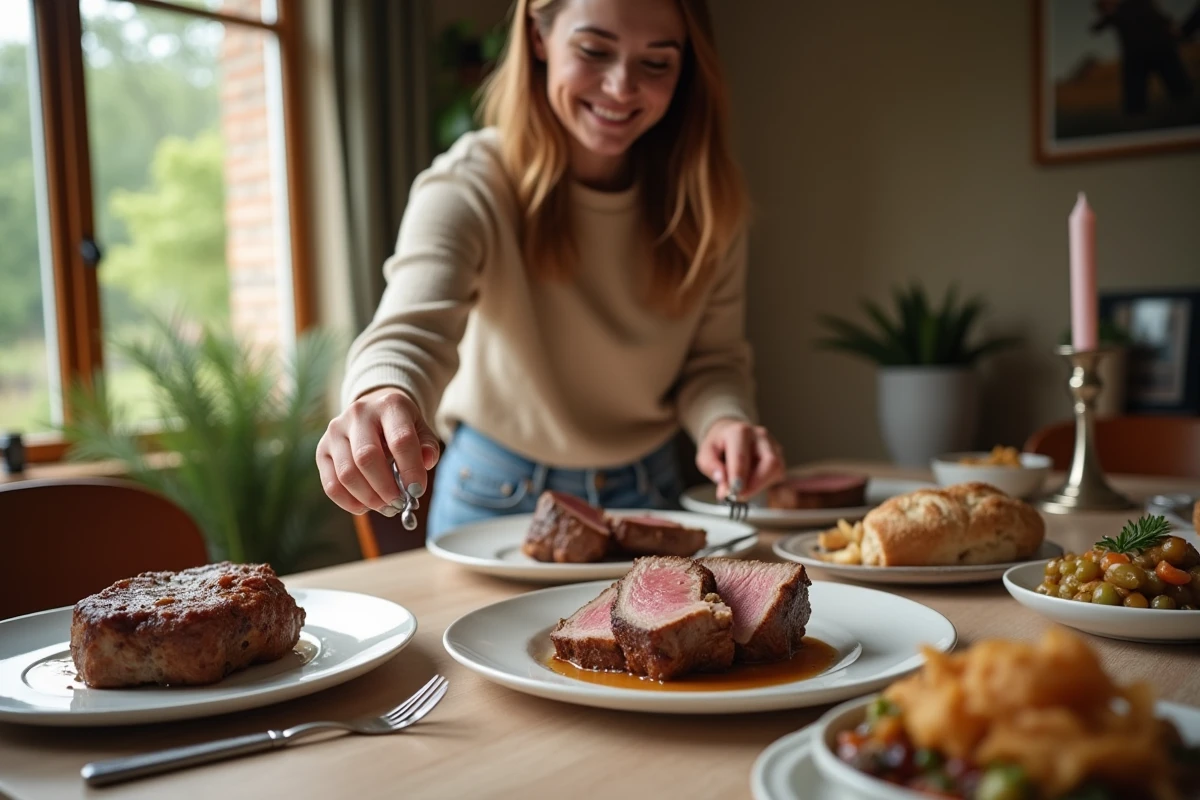
Before bringing the dish to the table, collect the juice to drizzle over each portion. Also offer a lemony yogurt sauce as a contrast, freshness against richness, it’s always a winner. A few grains of bulgur, light couscous, or a crunchy salad will add relief to the dish. One thing is certain: lamb shoulder in the oven rarely leaves anyone indifferent; each sharing becomes a suspended moment, etched directly into the memory of those gathered around your table.