Transplanting an adult olive tree remains one of the riskiest horticultural operations, even for a seasoned professional. Despite its reputation for hardiness, this tree does not forgive improvisation or approximation.
An olive tree moved without caution can languish for several years or even silently decline. However, precise and proven methods exist to preserve its integrity and encourage vigorous recovery. Every step matters, from choosing the right time to preparing the soil, and managing the roots.
Moving an adult olive tree: what you need to know before getting started
Moving an olive tree that has taken root for decades is not something to be improvised. Before grabbing the spade, observe the shape of the tree: standard olive, bushy olive, Tuscan shape, or even cloud-pruned olive. Each presents its own challenges. Centenarian or even millennial trees require heightened vigilance: the older the tree, the more fragile the root structure, and the more costly any mistake can be.
The ground must be prepared. There is no question of moving an olive tree on a whim or under weather constraints: the ideal window is at the end of winter or very early spring, far from the risks of frost or prolonged drought. Take the time to consult a landscaper or the local nursery to understand the root profile of your specimen. An olive tree from Provence will exhibit different adaptations than a Cipressino olive from elsewhere.
Logistics cannot be improvised. Some venerable specimens require a mini-crane Unic 706 to move the root ball smoothly. Examine the location where it will be planted: soil, drainage, light—all of it matters. The price of the olive tree and its history justify making every effort for a safe relocation.
Want to dive deeper? On how to move an adult olive tree, the dedicated page details each step: When to uproot an olive tree to replant it? – Cultivons nos Racines. Success hinges on the precision of the action, from the first cut to replanting, without neglecting pruning or transport.
What actions ensure the safety and recovery of the tree?
For the olive tree to withstand transplantation, every action counts. The root is its survival. Start by defining a generous root ball around the trunk: the wider it is, the more you preserve fine roots. With a well-sharpened pruner, cut the peripheral roots cleanly: a clean cut limits stress and prepares the tree for its new life.
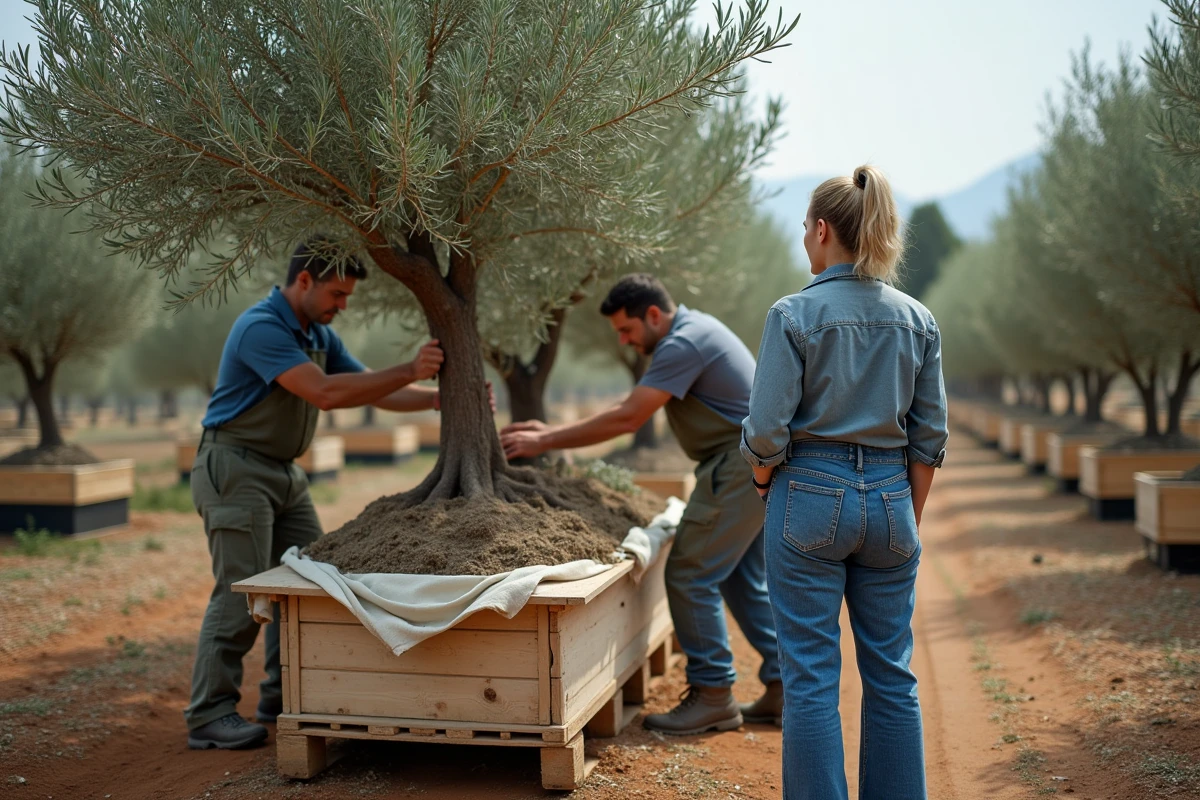
The lifting is done, for massive specimens, with the mini-crane Unic 706, under careful supervision. Ensure that the root ball remains attached to the trunk at every stage. On the branch side, keep the main framework but remove unnecessary shoots: reducing the leaf mass limits water loss and concentrates energy on root healing.
Here are the precautions that make a difference during the move:
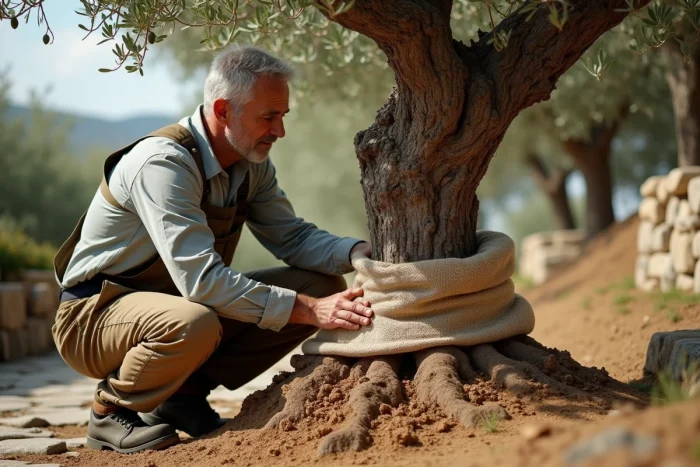
- Wrapping the root ball in a wintering veil protects roots and substrate from sudden drying out.
- Reinstalling the tree immediately in its hole, ensuring to respect its original orientation.
- Planting a sturdy stake to prevent the wind from destabilizing the whole during recovery.
In the face of cold winds, a temporary windbreak can sometimes be decisive, especially for ancient trees whose vigor may falter. Ultimately, moving an adult olive tree is a matter of details: the slightest negligence can jeopardize recovery. Only consistency, from the first spade thrust to the first new leaf, guarantees success.
Practical tips to support the recovery of your olive tree after relocation
To provide the olive tree with the best recovery conditions, it all starts with the soil. A draining soil, light and enriched with pebbles, is essential. Prepare a homemade mix: garden soil, sand, gravel. At the bottom of the hole, a few clay balls are enough to prevent water stagnation. Add a layer of mature compost or a hint of well-decomposed manure: this is the fuel for a healthy restart, without excess.
Watering should remain measured. After transplantation, do not drown the root ball: a modest moistening, suited to the season, is sufficient. Too much water weakens the olive tree and promotes the infamous peacock eye disease, a nightmare for any olive grower. For trees of respectable age, a light mulch retains freshness and limits temperature shocks.
Regularly inspect the foliage and trunk: it’s better to spot the slightest pest early. An airy pruning each spring keeps humidity and fungi at bay while strengthening the branches.
To support recovery, keep these reflexes in mind:
- Favor a balanced fertilizer, tailored for Mediterranean plants.
- Keep an eye out for warning signs: dark spots, drying leaves, wilting branches.
- Be moderate with fertilizer application: the adult olive tree prefers restraint over excess.
Moving an adult olive tree is about playing the long game: patience, consistency, and sure actions make all the difference. When, one morning, young shoots appear, it’s the promise of new rooting, and the quiet victory of a carefully taken bet.