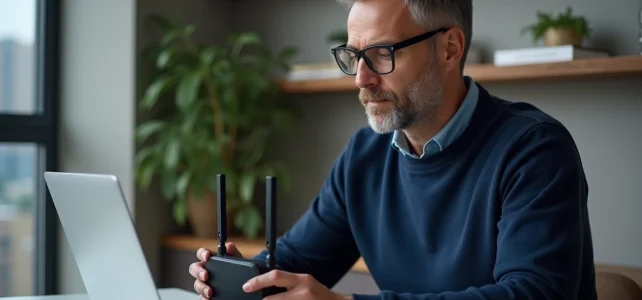
The initial configuration of Freebox OS often leaves ports open by default, exposing the administration interface to unauthorized login attempts. A weak password or the absence of two-factor authentication increases this risk, even on a home network.
Unknown settings, such as disabling the remote access service or fine-tuning user rights management, can significantly reduce the attack surface. Some advanced settings, rarely explored, offer an additional level of security that is essential for any box connected to the Internet.
See also : How to Boost Your Business Growth with Innovative Digital Solutions
Accessing Freebox OS: What You Need to Know Before You Start
Before making any changes to the freebox interface, ensure you are connected to your local network: this is the only way to access all administrative functions. For a first access, simply enter http://mafreebox.freebox.fr in the browser of your computer, smartphone, or tablet connected locally. The freebox server then generates a unique code to enter, which initiates pairing and opens centralized management.
The freebox interface connection relies on a username and password combination chosen during the first use. This choice is not trivial: select a complex phrase, avoid obvious sequences, and change this password regularly. To strengthen security, go to advanced settings and limit remote access. If you don’t actually need it, turn it off: every open access multiplies the risks of intrusion.
Related reading : How to Improve Your Figure Effortlessly: Focus on Innovative Techniques
The Freebox OS dashboard allows for precise management of user rights. Do not grant permissions lightly: each new profile creates a potential entry point to your network.
- Assign rights according to the device: computer, smartphone, or tablet, each access deserves specific attention.
- With the Freebox Connect app, keep an eye on connections and the overall activity of the network, to detect any anomalies without delay.
To go further and refine each parameter, the article administration of mafreebox on Digiterio offers a comprehensive overview. From the first configuration, every setting counts: the freebox interface concentrates all the levers of control for your home network.
How to Effectively Secure the mafreebox Interface? Settings Not to Neglect
On mafreebox, every access must be controlled. Start by checking your connection settings: change the default password, adopt strong authentication, and leave nothing to chance. On the wifi side, do not leave your network visible to everyone: hide the SSID and choose a WPA2 or WPA3 key, which is much more resistant than older standards.
To enhance security, several options are available to you:
- Enable parental control if children or teenagers use the network. Scheduling and content restrictions can be easily set from the management interface.
- Consider freebox remote access: disable it if you never manage the box remotely. An open access is an invitation to intrusion.
- Monitor the list of connected devices on the freebox network in the designated tab. Do not hesitate to remove any unknown or unused device to limit potential vulnerabilities.
To further enhance the privacy of exchanges, install a VPN directly via the advanced options. This additional protection secures your data, even outside your home. The freebox delta and freebox pop models include a wifi repeater: take the time to configure it with the same rigor, without compromising on security.
Don’t forget to regularly launch firmware updates from the interface: they fix vulnerabilities and refine the protection of your setup. Leaving the interface unattended risks opening the door to many abuses. Every detail counts, down to the smallest button.
Protecting Your Freebox Network Daily: Good Practices and Essential Tips
The security of a Freebox network is built over time. The more connected devices there are, the more risks multiply: opening ports for temporary use, forgotten devices, neglected disconnections. To maintain control, prioritize monitoring the Freebox OS dashboard, which displays active connections, alerts, and traffic status at a glance. Assign each user profile strictly necessary rights appropriate to its use. This case-by-case management limits breaches.
Some reflexes to adopt daily:
- Use a password manager to generate and store strong credentials. Reusing a password weakens the entire network.
- Activate parental control to adjust access according to profiles and usage periods, thereby limiting risky behaviors.
- Ensure to perform every firmware update: each version improves your network’s resilience against threats.
Your vigilance should not wane regarding the management of connected network devices: regularly remove old or unused equipment. A forgotten phone or a computer that hasn’t connected for months can become a vulnerability. Grant guest access only temporarily and revoke it as soon as possible. Manage each right carefully, isolate less reliable profiles, and block access when it is no longer justified.
Adding a new device? Don’t rush: configure it precisely, assign it strict permissions in the interface, and then check its behavior on the dashboard. Here, negligence has no place: every action, even minor, contributes to the robustness of your network.
At home and at work, the security of a Freebox is not something that is decreed; it is something that is worked on. It is up to everyone to take charge, as a well-protected network guarantees lasting digital peace.