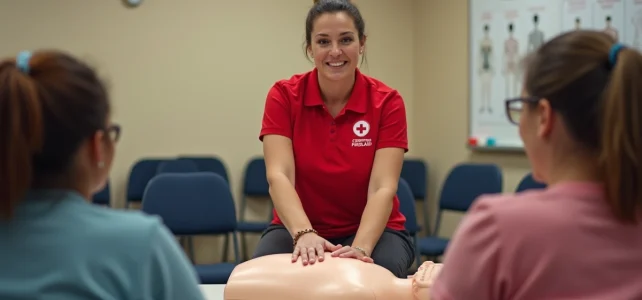
A first aid trainer is a certified professional who teaches first aid techniques and risk prevention protocols to various audiences, whether in a corporate setting or in community organizations. The pathway to becoming one follows a tiered progression, with each certification granting access to the next, and strict requirements for maintaining skills.
Mental load of the first aid trainer in the face of traumatic scenarios
First aid trainers repeatedly conduct realistic simulations (cardiac arrest, hemorrhage, road accident) several times a week. This repeated exposure to distress scenarios, even if simulated, generates psychological wear that is rarely addressed in traditional training programs.
See also : Tips and Tricks for a Fulfilling and Active Retirement Daily
Training programs are gradually incorporating a component of mental support for trainers. The French Red Cross has established a peer mentoring system over six months after certification, which helps reduce the failure rate in practical assessments while providing a structured space for discussion.
This psychological aspect distinguishes experienced trainers from beginners. Knowing how to lead a workshop on the recovery position is not enough: it is also necessary to manage the emotional reactions of trainees, who may be confronted with personal memories of accidents. To learn more about Soutien Adom, the complete pathway is detailed there with the accessible tracks.
You may also like : How to Obtain a Professional License Without a BTS: Solutions and Tips for Success

Mandatory certifications: from PSC1 to SST trainer certificate
The certification pathway follows a strict order. Each level serves as a prerequisite for the next, and no regulatory shortcuts exist.
- The PSC1 (Level 1 Prevention and Civic First Aid) serves as the foundation. This one-day training, delivered by organizations approved by the Ministry of the Interior, teaches basic actions: alerting, compressing, defibrillating, stopping a hemorrhage.
- The workplace first aid responder (SST) certificate adds a professional dimension. It covers risk prevention in the workplace and specific alert procedures relevant to the work environment.
- The SST trainer certificate, awarded after training provided by an organization authorized by the INRS, allows one to train workplace first aid responders. This level requires validated pedagogical skills demonstrated through practical and theoretical assessments.
Beyond the SST, the SST trainer of trainers represents the highest level. This training, provided exclusively by the INRS, certifies other trainers. Access requires significant experience as an active SST trainer.
Recertification and skills maintenance: deadlines to respect
Obtaining a certificate does not guarantee its retention. Each certification mandates periodic recertification, otherwise the trainer loses their authorization.
The maintenance and updating of skills (MAC) SST must be completed within the deadlines set by the INRS. The trainer must prove that they have regularly practiced between two recertification sessions. An inactive trainer for an extended period will need to retake the initial training.
A recent point deserves attention: PSSM (Mental Health First Aid) training has reduced its recertification cycle from twenty-four to twelve months since 2025. This cross-specialization attracts SST trainers who wish to expand their intervention scope beyond physical first aid to mental health prevention.
Keeping a renewal calendar
The administrative management of validity dates represents a real constraint. A trainer working for multiple companies must anticipate their MAC sessions several months in advance, as spots are often limited in authorized organizations.
Pedagogical skills and field experience: what makes the difference in the classroom
Technical mastery of actions does not make a good trainer. The ability to adapt one’s discourse to the audience determines the effectiveness of the training. A group of construction workers does not react the same way as an office team in response to an accident simulation.
Successful trainers develop three complementary skills:
- Managing collective stress during simulations. Some trainees panic, while others freeze. The trainer must guide the group back to the procedure without invalidating emotional reactions.
- Real-time evaluation of technical actions. Simultaneously observing hand positions during a cardiac massage, the rhythm of compressions, and the overall posture of the trainee requires a trained eye.
- Continuous updating of protocols. Recommendations regularly evolve, particularly regarding compression/ventilation ratios or the use of automated defibrillators.
Peer mentoring after certification
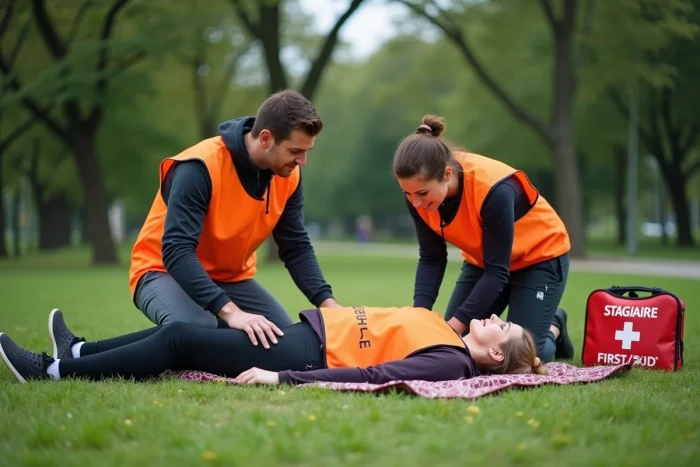
A survey conducted by the French Red Cross among its first aid trainers shows that peer mentoring reduces the failure rate in practical assessments. This program, spread over six months after obtaining the certificate, pairs a novice trainer with an experienced trainer who supports them during their first sessions.
This practice is more common in non-profit organizations than in private training institutions. Independent trainers, who represent a growing share of the market, do not always have access to it.
SST trainer or PSSM trainer: two distinct pathways
The SST pathway, focused on professional risk prevention and physical emergency actions, remains the most sought-after route by companies required to train workplace first aid responders.
The PSSM pathway opens a different field. The PSSM trainer focuses on detecting mental health issues and the first supportive actions in mental health. The two certifications do not replace each other, but their combination allows for intervention across a broader spectrum of situations in the workplace.
The choice between these two pathways depends on the target audience and the context of practice. A trainer oriented towards the industrial sector will favor SST. A professional working in the medico-social or educational field will find PSSM a relevant complement to their practice.
The profession of first aid trainer requires continuous investment in training, recertification, and managing one’s own mental load. Certifications accumulate, protocols change, and each training session confronts unpredictable human reactions. It is precisely this demand that makes the role difficult to automate and consistently sought after by prevention organizations.