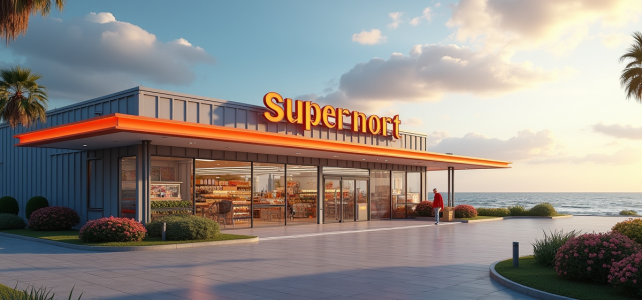
Lidl has no stores in Corsica, despite a strong presence in all other French regions. This absence contrasts with the national strategy of the brand, which usually favors comprehensive coverage of the territory.
Industry players mention specific logistical costs, supply constraints, and local regulatory requirements that complicate establishment. Meanwhile, other large retailers, such as Carrefour and Leclerc, have managed to adapt their model to the island environment. The gap is widening between the commercial dynamics of the mainland and the economic realities specific to the island.
Further reading : Academic Messaging: Access by Academy in 2025
Lidl’s absence in Corsica: understanding the logistical, economic, and cultural challenges of an island territory
Lidl Corsica: the association is surprising. On the mainland, the brand is deploying a rapid expansion strategy. But in Corsica, the brand is notable for its absence. This choice results from a combination of factors, where island logistics, local economy, and regulatory framework intersect.
The first barrier? Transport. Delivering goods to the island, dealing with the sea, juggling port constraints: each step increases the cost. The Lidl stores rely on centralized logistics, designed for mainland France. But the island geography imposes delays, additional costs, and a stock management that is much less predictable.
Recommended read : International SEO: When Experts Gather in Asia
Another uniqueness: the Corsican market rejects the copy-paste approach from the mainland. Here, the population defends local products, favors short supply chains, balancing modernity with the preservation of traditional sectors. The PADDUC strictly regulates commercial development, limits the proliferation of large stores, and protects the island’s economic fabric.
Cultural adaptation cannot be overlooked. The development of island economies and the uniqueness of Corsican society require a reevaluation of traditional retail strategies. Even if there is demand, the response cannot settle for a prefabricated model. Those hoping to consult the list of Lidl stores in Corsica face a reality: no addresses on the horizon. This choice speaks volumes about the strength of local players and the complexity of a Lidl establishment in an island context, where every decision impacts purchasing power, social cohesion, and the economic stability of the territory.

What impacts and prospects for the Corsican market in light of a potential Lidl establishment, considering the strategies of already present brands
A Lidl establishment in Corsica would disrupt the balances of the Corsican market. If the brand chooses to cross the Mediterranean, it will have to navigate an already organized ecosystem, where the vigilance of the departmental commercial development commissions (CDAC) slows the proliferation of large stores. The stakes go beyond pricing: they affect local employment, the promotion of local products, and the ability to forge strong ties with island producers.
Here are the points where Lidl’s arrival could play a decisive role:
- Lidl stores could accelerate the transformation of the sector, provided they focus on a strategy of integration that respects island identity: highlighting the short supply chain, dedicated spaces for Corsican products, launching a Lidl Plus loyalty program tailored to local practices.
- Establishing effective logistics is a challenge: it involves managing transport costs, adjusting to seasonal peaks, and anticipating demand subject to fluctuations in purchasing power.
Today, the dynamics of commercial development in Corsica oscillates between two priorities: preserving the economic fabric and welcoming innovation. A player like Lidl, if it secures the agreement of local authorities, will need to engage in continuous dialogue with local communities and professionals in the island market. The challenge lies here: combining attractiveness, competitiveness, and territorial anchoring. Getting involved in local life, for example by sponsoring the Tour de Corse, would be a strong signal of openness and rooting.
A gradual arrival, attentive to the balance of the territory, could change the landscape of distribution. Every advancement will be closely monitored, every partnership evaluated based on collective interest and the capacity to support the development of the island economy.
One day, perhaps, the German brand will become part of daily life in Corsica. Until then, the territory continues to reinvent itself, balancing the protection of its specificities with openness to new models. The future? It will be written between land and sea, at the pace of local choices and the ambitions of major brands.