
No European regulation requires mentioning the loss of nutrients during the industrial cooking of prepared meals. Yet, labeling highlights “preserved vitamins” or “quality ingredients,” without distinguishing the cooking method used.
Some prepared dishes display identical nutritional values on the packaging, whether they are intended for the microwave or the traditional oven. This paradox fuels confusion about the real benefits of different preparation methods and raises questions about the choices to prioritize for a more balanced diet.
Microwave or traditional oven: what differences for your prepared meals?
Quick and convenient, the microwave has carved out a prime spot in French kitchens. For many, it is the everyday ally, the one that saves the day at lunch or dinner time, without frills. But behind the ease of use, there are notable differences compared to cooking in a traditional oven.
Coming out of the oven, a microwave cordon bleu hardly resembles its gratin version. The coating remains soft, far from the expected crispiness. The heating technique is not trivial: the microwave acts deeply, quickly heating the core, but sometimes leaves the edges lukewarm, even rubbery. In contrast, the traditional oven takes its time. It envelops the dish in heat, promoting golden textures, gratin layers, and developed aromas. It’s not just a matter of taste: the method also influences nutrient preservation.
Here’s what concretely distinguishes the two cooking methods:
- The microwave limits the loss of certain vitamins, particularly those sensitive to heat like vitamin C or B vitamins, due to shorter exposure.
- The traditional oven evaporates more water, allowing for roasting and gratin, but exposes nutrients to longer heat, which can alter some of them.
The success of the microwave is also explained by the search for efficiency: when time is short, it allows for quickly reheating a dish or frozen vegetables. However, if the goal is gustatory pleasure, some dishes, gratins, roasts, and family recipes, reveal their full potential once cooked in the oven. The choice is therefore never neutral: it stems from one’s priorities, the expected result, and the time available.
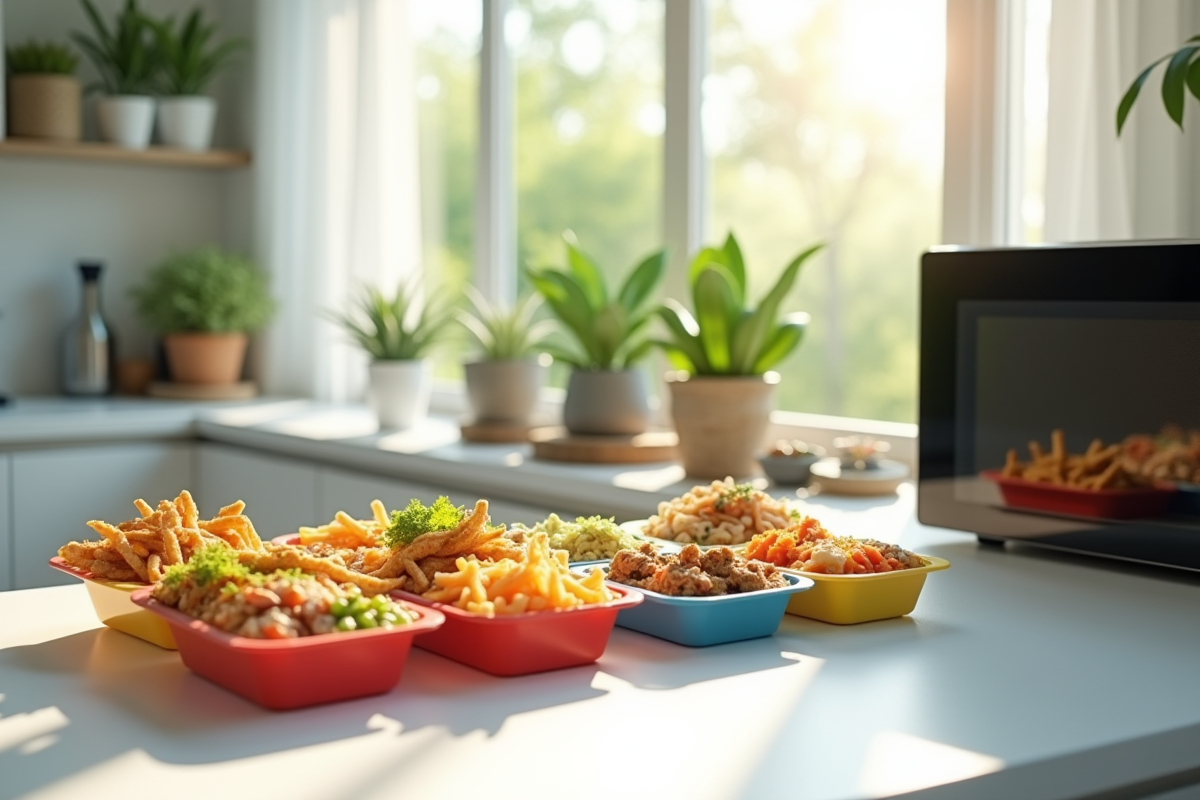
Towards healthier alternatives: nutritional impacts, tips, and ideas for prepared dishes
Microwave cooking has become a habit, but caution is required regarding the products offered. In the aisles, the ingredient list of prepared meals sometimes resembles an endless inventory: additives, excess salt, and less visible fats. As a result, nutritional balance is not always present. However, the microwave is not limited to ultra-processed foods.
Favoring homemade recipes ready to heat changes the game. Focusing on plain, roasted, or simply cooked frozen vegetables, seasoned with spices or herbs, helps preserve a good part of the nutritional quality. This cooking method, less energy-intensive, adapts to a fast-paced lifestyle without sacrificing food vigilance.
To create a balanced plate, a few gestures make a difference:
- Prepare your prepared meals from simple ingredients: steamed vegetables, rice, quinoa, sources of lean protein.
- Add a drizzle of olive or rapeseed oil after cooking to preserve sensitive fatty acids and enhance flavor.
- Play with variety by combining, for example, roasted vegetables and whole grains for a filling and tasty effect.
Choosing the microwave does not mean succumbing to the convenience of ultra-processed meals. It is also an opportunity to rethink habits, value raw products, and combine practicality with attention to health. The challenge lies here: to combine speed and quality, without losing sight of the pleasure of eating.
Ultimately, each reheated meal becomes a reflection of a compromise between time, taste, and nutritional vigilance. And what if, tomorrow, the real alternative was to reinvent simplicity, without ever sacrificing common sense?